

 See My Latest Article on HelloNation
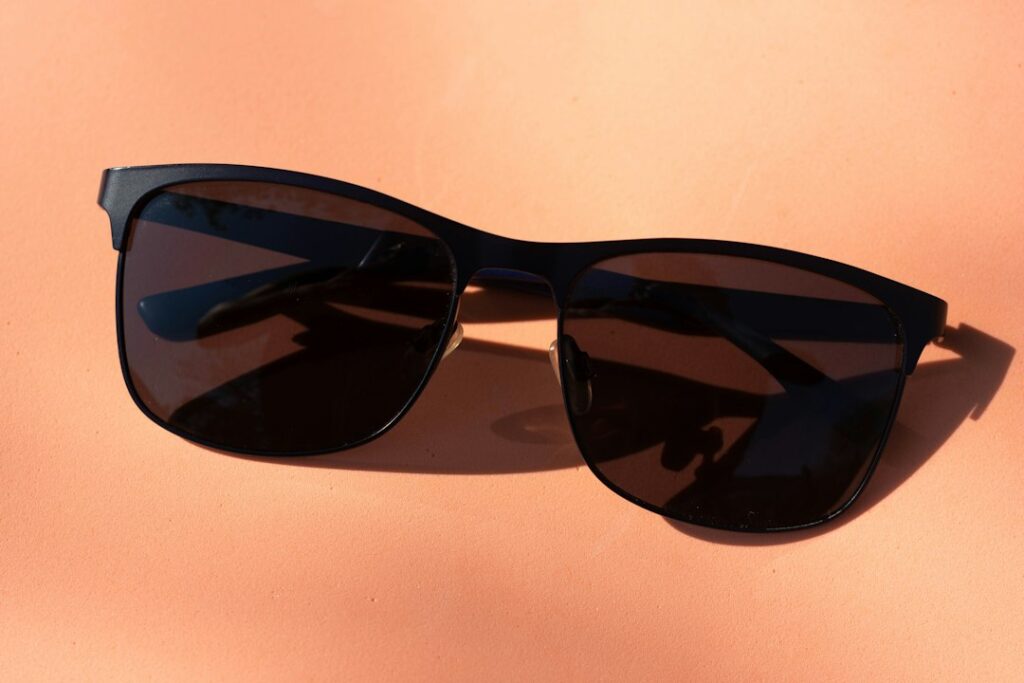
What should sunglasses protect against?
The right sunglasses should block 99% to 100% of both UVA and UVB radiation. They should also reduce glare, fit securely, and provide enough coverage to limit sunlight entering from the sides, top, and bottom.
Ultraviolet exposure can affect the surface of the eye, the cornea, the lens, and the delicate skin around the eyelids. Over many years, repeated exposure may contribute to cataracts, growths on the eye’s surface, and other sun-related eye problems. Short-term exposure to intense reflected light can also cause painful irritation similar to a sunburn of the cornea.
For residents of Kenosha, bright conditions may occur during every season. Summer sunlight reflecting from water and pavement, winter glare from snow, and windy conditions near open outdoor areas can all make eye protection useful beyond the warmest months.
How can someone tell whether sunglasses provide real UV protection?
Look for clear labeling that says:
- “100% UV protection”
- “100% UVA and UVB protection”
- “UV400”
These statements indicate that the lenses are designed to block ultraviolet wavelengths through approximately 400 nanometers. The specific color or darkness of the lenses does not prove that they provide UV protection.
Very dark sunglasses without adequate UV filtering can be a poor choice. Dark lenses cause the pupils to widen, potentially allowing more unfiltered ultraviolet radiation to enter the eye. A lightly tinted lens with proper UV protection may be safer than a nearly black lens without reliable labeling.
Price is not a dependable measure of protection. Expensive sunglasses do not automatically block more UV radiation than a basic, clearly labeled pair. If the label is missing, vague, or limited to statements such as “sun protection,” the level of UV filtering is uncertain.
Do polarized lenses protect the eyes better?
Polarized lenses reduce glare, but polarization and UV protection are separate features. A polarized lens may be helpful for comfort and visual clarity, yet it still needs a label confirming full UVA and UVB protection.
Polarization is especially useful around reflective surfaces. It can reduce glare from:
- Snow and ice
- Water
- Wet roads
- Light-colored pavement
- Vehicle surfaces
- Windows and other bright structures
This can make driving, walking, fishing, boating, or outdoor recreation more comfortable. Polarized lenses do not necessarily improve vision in every situation, however. Some digital displays may look darker or harder to read, and polarization does not replace impact-resistant protective eyewear during hazardous work.
What frame shape offers the most protection?
Sunglasses that sit close to the face and cover more of the eye area generally reduce stray light better than small, widely spaced frames. Wraparound or larger frames can limit ultraviolet exposure from the sides, especially during outdoor activities.
A good frame should:
- Stay in place when the head moves
- Rest comfortably without pinching
- Cover the eyes without touching the eyelashes
- Avoid large gaps around the temples
- Sit evenly across the bridge of the nose
- Allow clear vision without distortion

Fit matters in changing weather. Wind, cold, and outdoor activity can cause eyes to water, and poorly fitted sunglasses may slide down or leave the eyes exposed. Children also need properly labeled sunglasses; toy sunglasses may not provide dependable UV protection.
A wide-brimmed hat adds another layer of protection by reducing overhead and reflected light. Sunglasses and a hat work better together than either one alone.
Which lens color is best?
Lens color affects visual comfort and contrast more than UV protection. Gray lenses usually preserve natural color perception and work well for general outdoor use. Brown or amber lenses may improve contrast in some changing-light conditions. Green lenses can provide comfortable brightness reduction while maintaining relatively natural color.
No single tint is ideal for every activity. Very dark lenses may be useful in intense sunlight but can be inconvenient in low light. Sunglasses should be removed when entering a dim indoor area or when they interfere with safe vision.
Gradient lenses are darker at the top and lighter toward the bottom. They may be useful for driving because they reduce overhead sunlight while allowing more light through the lower portion of the lens. They still need full UV protection and should not be so dark that they reduce the ability to see road hazards.
Photochromic lenses change darkness in response to light. Some do not become as dark inside a vehicle because windshields filter much of the ultraviolet radiation that activates the lens.
What sunglasses are appropriate for driving?
For daytime driving, sunglasses should reduce glare without making it difficult to see traffic signals, pedestrians, lane markings, or changes in road conditions. Gray or brown lenses are commonly comfortable, provided they preserve useful color recognition and are not excessively dark.
Polarized lenses may reduce glare from wet pavement and vehicle surfaces, but drivers should check that dashboard displays remain readable. Sunglasses should be clean, free of deep scratches, and stored where they will not become damaged.
Avoid wearing very dark sunglasses at dusk, during storms, or in other low-light conditions. If vision feels dim or colors appear substantially altered, the lenses may not be suitable for that setting.
Are regular sunglasses enough for yardwork or home projects?
Regular sunglasses are designed for bright sunlight, not for high-speed debris or impact hazards. Mowing, trimming, drilling, grinding, cutting, hammering, and similar tasks require protective eyewear specifically rated for impact resistance.
Wraparound sunglasses may help block wind, dust, insects, and some flying debris, but they should not be treated as a substitute for safety glasses or goggles when tools or machinery are involved. The same distinction applies to sports in which balls, sticks, racquets, or other objects may strike the face.
For outdoor work, the safest combination may include impact-rated protective eyewear with UV protection. Eye protection should match the actual hazard rather than relying on the appearance of the lenses.
Do contact lenses replace sunglasses?
No. Some contact lenses include UV-blocking properties, but they do not cover the entire eye or the surrounding eyelid skin. Sunglasses remain useful for blocking light that reaches areas not covered by the contact lens.
People who wear contacts may also experience dryness or irritation in wind, cold temperatures, or bright sunlight. Sunglasses with a close fit can reduce airflow across the eyes and may improve comfort, although persistent irritation should not be dismissed as a normal effect of wearing contacts.
How should sunglasses be maintained?
Scratched, loose, or distorted lenses can interfere with vision even if the UV filtering remains intact. Clean lenses with water and a mild cleanser or a lens-cleaning solution, then dry them with a soft microfiber cloth. Avoid rough paper products, clothing, or household cleaners that may damage lens coatings.
Store sunglasses in a protective case rather than loose in a vehicle console, bag, or pocket. Heat can warp some frames and coatings. Replace sunglasses when the lenses are badly scratched, the frame no longer fits securely, or the visual field appears distorted.
Anyone who develops severe eye pain, marked light sensitivity, sudden blurred vision, or a persistent foreign-body sensation after intense sun exposure should seek prompt medical evaluation. Sunglasses can reduce risk, but they cannot correct an eye injury that has already occurred.