

 See My Latest Article on HelloNation
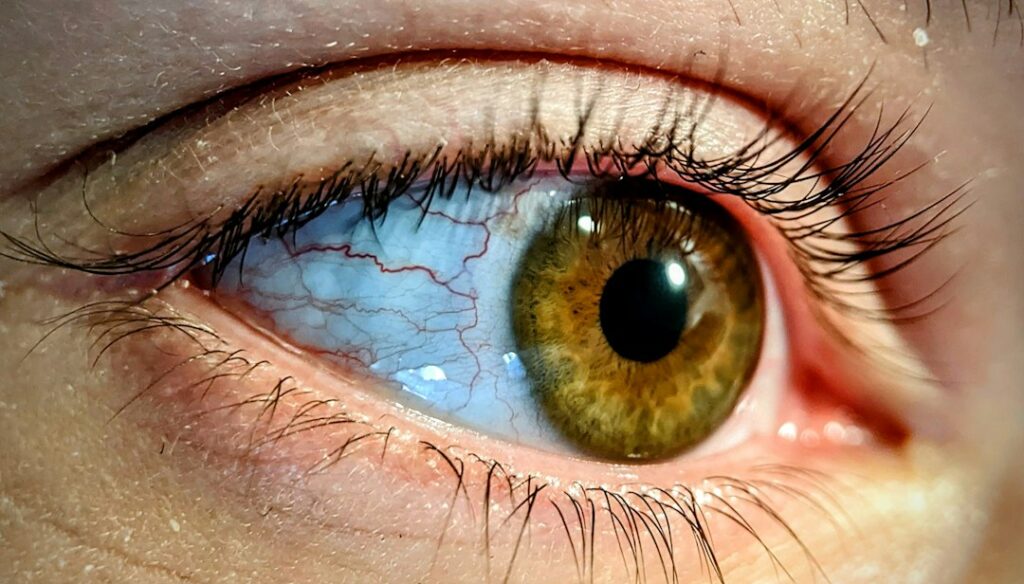
A speck of dust, an eyelash, or a small piece of debris often causes temporary irritation, but some eye injuries require immediate treatment. The safest response depends on what entered the eye, how fast it was moving, and whether vision or the surface of the eye has been affected.
What should you do first?
Wash your hands, avoid rubbing the eye, and let tears or gentle rinsing remove loose material. Do not use tweezers, fingernails, cotton swabs, or other tools on the colored part of the eye.
If a small particle entered while doing household cleaning, yard work, home repairs, or outdoor activities, move away from the source and sit in a well-lit area. Remove contact lenses if they come out easily, particularly before rinsing. A contact lens can trap debris against the eye’s surface. ([mayoclinic.org](https://www.mayoclinic.org/first-aid/first-aid/basics/art-20056645?utm_source=openai))
How do you rinse out dust or a loose particle?
Use a gentle stream of clean, lukewarm water. Hold the eyelids open and allow the water to flow across the eye rather than spraying forcefully into it. A shower stream directed onto the forehead, or water poured gently from a clean glass, can be useful.
Blinking several times during rinsing may help move a loose particle toward the inner corner of the eye. If the object is clearly floating on the white part of the eye or beneath the lower eyelid, continued gentle flushing is usually safer than trying to pick it out.
Do not rub the eye afterward. Even when the particle is gone, the eye may continue to feel scratchy because the cornea—the clear front surface of the eye—may have a small abrasion. That sensation can last for several hours and sometimes up to a day. ([mayoclinic.org](https://www.mayoclinic.org/first-aid/first-aid/basics/art-20056645?utm_source=openai))
When should you stop trying home first aid?
Do not attempt removal if the object appears embedded, is stuck on the colored part of the eye, or is protruding from the eye. Do not press on the eye or place a tight patch over it.
Urgent evaluation is needed if the injury involved:
- Metal fragments from grinding, hammering, drilling, or cutting
- Glass, wood, or another sharp object
- A high-speed projectile
- A nail, wire, splinter, or tool striking the eye
- A visible cut or change in the shape of the pupil
- Significant bleeding, swelling, or severe pain
High-speed particles can penetrate farther than they appear to from the outside. A suspected penetrating injury should be protected from pressure with a rigid eye shield, if available, while emergency care is arranged. Do not try to remove the object. ([eyewiki.aao.org](https://eyewiki.aao.org/Pre-Ophthalmologist_Management_of_Eye_Trauma?utm_source=openai))
What should you do if a chemical gets in the eye?
Begin flushing immediately with clean, lukewarm water for at least 20 minutes. Do not wait to identify the product before starting irrigation. Hold the eyelids open and keep rinsing while removing contact lenses if they come out during the flush.
For a chemical in one eye, tilt the head so water flows away from the unaffected eye. If both eyes are exposed, water can be directed across the bridge of the nose while both eyes are held open. A workplace eyewash station may be used if it is immediately available.
Do not try to neutralize an acid with a base or a base with an acid. Do not put anything other than water or appropriate saline rinse into the eye unless emergency personnel specifically instruct it. Strong alkaline substances—including some drain cleaners, concrete products, fertilizers, and oven cleaners—can cause serious damage even when the eye initially looks only mildly red. ([mayoclinic.org](https://www.mayoclinic.org/first-aid/first-aid-eye-emergency/basics/art-20056647?p=1&utm_source=openai))
A chemical splash requires immediate medical evaluation after flushing. Bring the product container, label, or safety information if doing so does not delay care.

What symptoms mean the eye may be scratched?
A corneal abrasion can feel like something is still stuck in the eye even after the particle has been removed. Common symptoms include tearing, redness, pain with blinking, light sensitivity, and blurred vision.
A mild foreign-body sensation that steadily improves after rinsing may resolve on its own. Persistent or worsening symptoms should not be ignored, particularly if the discomfort continues beyond 24 hours, vision is blurry, or light becomes difficult to tolerate. ([mayoclinic.org](https://www.mayoclinic.org/first-aid/first-aid/basics/art-20056645?utm_source=openai))
Do not use someone else’s prescription eye drops. Avoid redness-relief drops as a substitute for an examination, and do not use numbing drops at home. Numbing medication can hide worsening damage and may delay appropriate treatment.
Does the season or setting change the risk?
In Kenosha, outdoor conditions can expose residents to windblown grit, plant material, and small particles during spring cleanup, summer recreation, autumn yard work, and winter home maintenance. Dry, windy days may increase irritation from dust, while indoor heating during colder months can make the eye’s surface more vulnerable to discomfort from minor debris.
Household exposure is also common. Cleaning products, solvents, sprays, gardening chemicals, and fine particles from home projects can injure the eye. Protective eyewear is especially important during grinding, drilling, cutting, mowing, or any activity that sends material into the air. Regular eyeglasses are not always designed to seal against flying particles.
When is emergency care necessary?
Seek emergency care promptly for any chemical exposure, penetrating injury, sudden vision change, severe pain, double vision, marked light sensitivity, uncontrolled bleeding, or an object that cannot be rinsed away.
Urgent evaluation is also appropriate when pain or redness is increasing rather than improving, when the eyelid is badly swollen, or when nausea or headache occurs with eye pain. These symptoms can indicate more than a surface particle or minor scratch. ([medlineplus.gov](https://medlineplus.gov/ency/article/000054.htm?utm_source=openai))
Children may have difficulty describing blurred vision or light sensitivity. Persistent blinking, refusal to open the eye, unusual tearing, or continued rubbing after an accident should be taken seriously.
How can eye injuries be prevented?
Keep chemical containers closed and stored according to their labels. Use splash protection when pouring cleaners or using sprays. During repair and maintenance work, wear wraparound protective eyewear designed for impact resistance.
Avoid blowing debris away from the face, and do not rely on a fan to clear dust from a work area. In homes with children, store sharp objects, chemicals, and small debris-producing materials out of reach.
The basic rule is simple: rinse loose material, never rub the eye, and treat chemical exposure or high-speed injuries as emergencies. A brief scratchy feeling may follow a minor particle, but pain, vision changes, or symptoms that fail to improve need prompt medical assessment.